Sustainability in Indoor Playgrounds: Building Responsibly for the Future
Sustainability in the leisure industry means creating play environments that remain safe, functional and attractive for many years while reducing unnecessary material consumption and waste. As an experienced indoor playground supplier and playground equipment supplier, Cheer Europe focuses on durable construction, modular systems and responsible material use when developing indoor playgrounds and trampoline parks.
Our goal is to create spaces where children can play, move, interact and develop in a safe environment while ensuring that every facility is designed with its long-term environmental impact in mind.
Why is durability essential for sustainable playground equipment?
The longer playground equipment remains safe and functional, the less frequently it needs to be repaired, replaced or completely rebuilt. Durability is therefore one of the most important elements of sustainable playground design.
Cheer Europe’s indoor playground equipment is developed to withstand intensive daily use, including facilities that welcome hundreds or even more than a thousand visitors per day. Strong structural components and carefully selected materials help playground operators keep their facilities in operation for many years.
A longer lifespan reduces the need for new materials, limits waste production and decreases the environmental impact associated with manufacturing and replacing entire playground systems.
How does modular construction support recycling and reuse?
Modularity makes it possible to modify an existing playground without replacing the complete structure. Individual attractions, routes, platforms or play elements can be adjusted, extended or reorganised according to changing visitor expectations.
Much of the steel framework used in our indoor play equipment can remain in place when a playground is redesigned. Existing structures can therefore be incorporated into a new layout instead of being discarded.
This approach offers several environmental and operational advantages:
- fewer raw materials are required,
- less construction waste is produced,
- existing equipment can be reused,
- playground layouts can evolve over time,
- renovation can be more efficient than complete replacement.
Modular construction also enables operators to update their kids indoor play equipment as their target audience, available space or business concept changes.
How can trampoline parks become more sustainable?
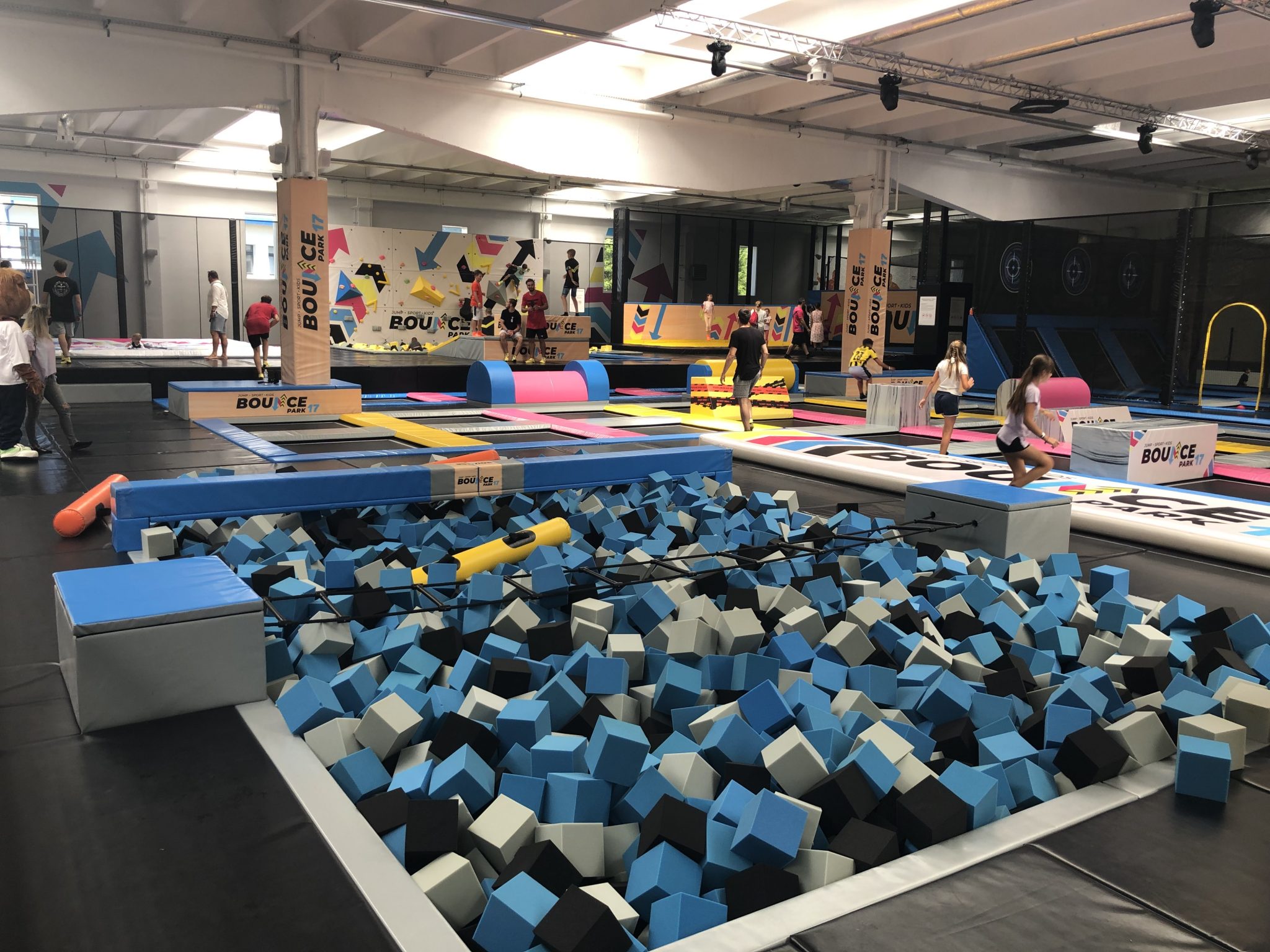
The same principles apply to trampoline parks. High-quality trampoline park equipment should be designed for intensive use, regular maintenance and the possible replacement of individual components.
Instead of removing an entire attraction when one part reaches the end of its usable life, selected components can often be repaired or replaced separately. A professional trampoline park supplier should therefore consider not only the initial installation but also the long-term operation, maintenance and adaptability of the facility.
A durable and modular trampoline park can remain commercially attractive while using existing structural elements for a longer period.
How does Cheer Europe approach material selection?
Safety and hygiene are fundamental requirements in every indoor playground. Certain areas therefore require materials such as PVC, protective plastics, padding and easily washable surfaces.
These materials are commonly used in playground construction because they help protect children, simplify cleaning and support compliance with hygiene requirements. In attractions such as soft play area equipment, soft protective surfaces are particularly important for reducing the risk of injury.
Although some synthetic materials cannot be completely avoided, we aim to use them responsibly and only where they have a clear safety, hygiene or functional purpose. At the same time, we focus on extending their usable life through quality manufacturing, appropriate installation and regular maintenance.
Sustainability is also about long-term usability
A sustainable playground is not defined only by the materials from which it is built. Its ability to remain relevant, safe and enjoyable over time is equally important.
Facilities that can be adapted to new concepts, updated with additional attractions or reorganised according to visitor behaviour are less likely to require complete replacement. This flexibility helps operators protect their investment while reducing unnecessary consumption.
For Cheer Europe, sustainability means combining:
| Area | Sustainable approach |
| Construction | Strong structures designed for intensive long-term use |
| Playground design | Modular layouts that can be modified or expanded |
| Materials | Responsible use based on safety and hygiene requirements |
| Renovation | Reuse of existing steel structures and compatible components |
| Maintenance | Replacement or repair of individual parts where possible |
| Future development | Facilities that can adapt to new visitor expectations |
Our responsibility to future generations
Every indoor playground and trampoline park represents more than a technical installation. It is a place where children develop movement skills, build confidence, interact with others and create lasting memories.
We believe that designing these environments also involves a responsibility towards the future. Children deserve spaces that are exciting and safe today, but they should also inherit a world in which they can continue to grow and fulfill their ambitions.
By developing durable, modular and reusable leisure facilities, Cheer Europe aims to balance commercial performance, visitor experience and responsible resource use.
Frequently Asked Questions
What makes an indoor playground sustainable?
A sustainable indoor playground combines durable construction, modular design, responsible material use and the ability to repair, reuse or replace individual components instead of rebuilding the entire facility.
Why is durability important for indoor playground equipment?
Durable equipment remains safe and operational for longer. This reduces the need for frequent replacement, limits waste and lowers the consumption of new materials.
Can an existing indoor playground be redesigned?
Yes. Modular playground systems can often be extended, reorganised or updated while retaining much of the existing steel structure and selected play components.
Are plastics and PVC necessary in indoor playgrounds?
In some areas, plastics and PVC are required for safety, hygiene, padding and easy cleaning. The objective is to use these materials responsibly and extend their lifespan wherever possible.
Can trampoline park equipment be reused during renovation?
Depending on its condition and compatibility with the new design, parts of the existing structure or individual components may be reused, repaired or integrated into an updated trampoline park layout.
 See our Instagram

